
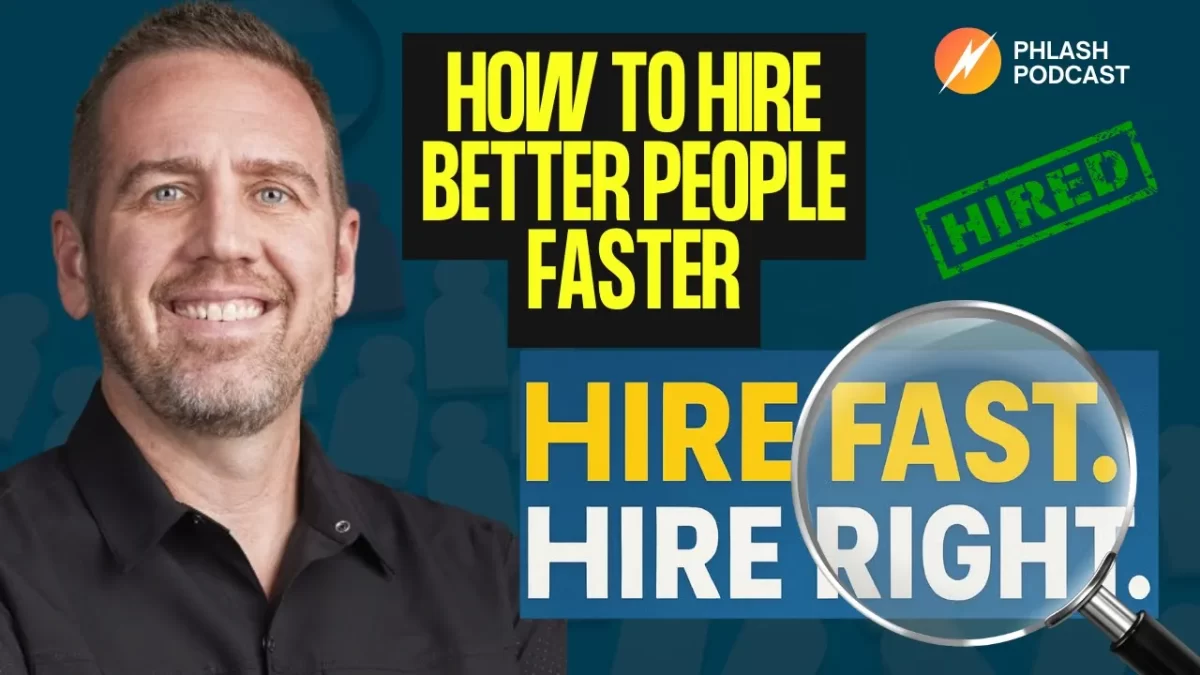
How to Hire Better People, Faster: Lessons from Ryan Englin of Core Matters

How to Hire Better People, Faster: Lessons from Ryan Englin of Core Matters
Hiring is one of the biggest challenges home service business owners face. Whether you run an HVAC company, plumbing business, or electrical service, finding and keeping great technicians often feels like an uphill battle.
I know this pain firsthand. Back when I was running a $3M home service company with 28 technicians, hiring and keeping the right people was the bane of our existence. That’s why I was excited to sit down with Ryan Englin, Founder & CEO of Core Matters and author of Hire Better People Faster. With over 20 years of experience, Ryan has developed the Core Fit Hiring System, which helps contractors transform recruitment, onboarding, and retention into true growth channels.
In our conversation, Ryan shared some powerful insights that every service-based business owner should hear.
Why Most Businesses Struggle with Hiring
Ryan grew up in a blue-collar family. His father ran his own business, only to discover years later that instead of gaining freedom, he became trapped by it. Watching that, Ryan thought the problem was revenue. If only his dad had more customers, things would improve.
So Ryan started a marketing company to help contractors fill their pipelines. But then something happened: his clients said, “I don’t need more leads. I need more techs.”
That’s when Ryan realized the real bottleneck wasn’t customers it was people. Companies didn’t just need help hiring; they needed help retaining and engaging employees.
Recruitment is Marketing
Most contractors think of marketing only as a way to attract customers. But Ryan makes a powerful point: recruitment is also marketing.
When a candidate visits your website and sees “24/7 Emergency Service” plastered across the top, what do they think?
Not “Wow, what great service,” but rather: “So I’ll be working nights and weekends, missing family time? No thanks.”
Now flip it. Imagine your homepage said:
- “We only hire the best technicians.”
- “We invest in training, clean uniforms, and new trucks.”
- “We value work-life balance so our techs can serve you better.”
Job seekers read that and think, “I want to work there.”
Customers read it and think, “I want those techs in my home.”
That’s the double benefit of employee-first marketing: it attracts great hires and better customers.
The Real Problem Isn’t a Labor Shortage
Ryan doesn’t believe there’s truly a labor shortage in the trades. Instead, he calls it a labor crisis a retention problem caused by not valuing people beyond a paycheck.
Why do employees leave? His research shows three main reasons:
- They don’t feel valued.
- They don’t like their boss.
- They’re burned out from being short-staffed.
And the #1 issue? Lack of value.
Paychecks don’t equal appreciation. Employees want to feel heard, respected, and supported in their goals whether that’s paying off debt, saving for their kids’ college, or simply being home for dinner.
Onboarding: More Than Paperwork
One of Ryan’s strongest takes: onboarding is not HR paperwork.
He compares onboarding to moving in with a spouse. Every business has a “right way” to do things how to close tickets, load a truck, or handle customers. But instead of teaching those expectations, many companies throw new hires into a truck on day one and hope for the best.
The result? Frustration, disengagement, and turnover.
Ryan recommends a 90-day onboarding process where the first two weeks are critical. During that time, you show new hires how you think, not just what you do. Simple things like ride-alongs, team lunches, and one-on-one check-ins help employees feel connected and valued from the start.
Stop Throwing Money at Indeed
Many contractors waste thousands each month on Indeed ads. But as Ryan points out, only 3–5% of the job market is actively looking for work. Meanwhile, 70% are passively looking meaning they’re open to new opportunities but not scrolling job boards.
That 70% hangs out on social media, checks company websites, and asks friends and family for referrals. If your brand looks attractive and your career page is easy to use, you’ll win them over.
Here’s the key:
- Make your “Join Our Team” button as prominent as your “Call Now” button.
- Share employee testimonials and videos.
- List real open jobs on your website (not just “send us your resume”).
- Make it easy to apply no fax machines or clunky downloads.
Over time, this builds a bench of qualified candidates who want to work for you so you don’t need to depend on expensive job boards.
Final Thoughts
Attracting and keeping great people isn’t about luck it’s about systems.
If you want to scale your business, you need to:
- Treat recruitment like marketing.
- Focus on retention and engagement.
- Invest in real onboarding.
- Build a brand employees want to be part of.
As Ryan put it: “We don’t have a labor shortage. We have a people problem.” Solve that, and you won’t just fill positions you’ll build a team that fuels growth for years to come.