
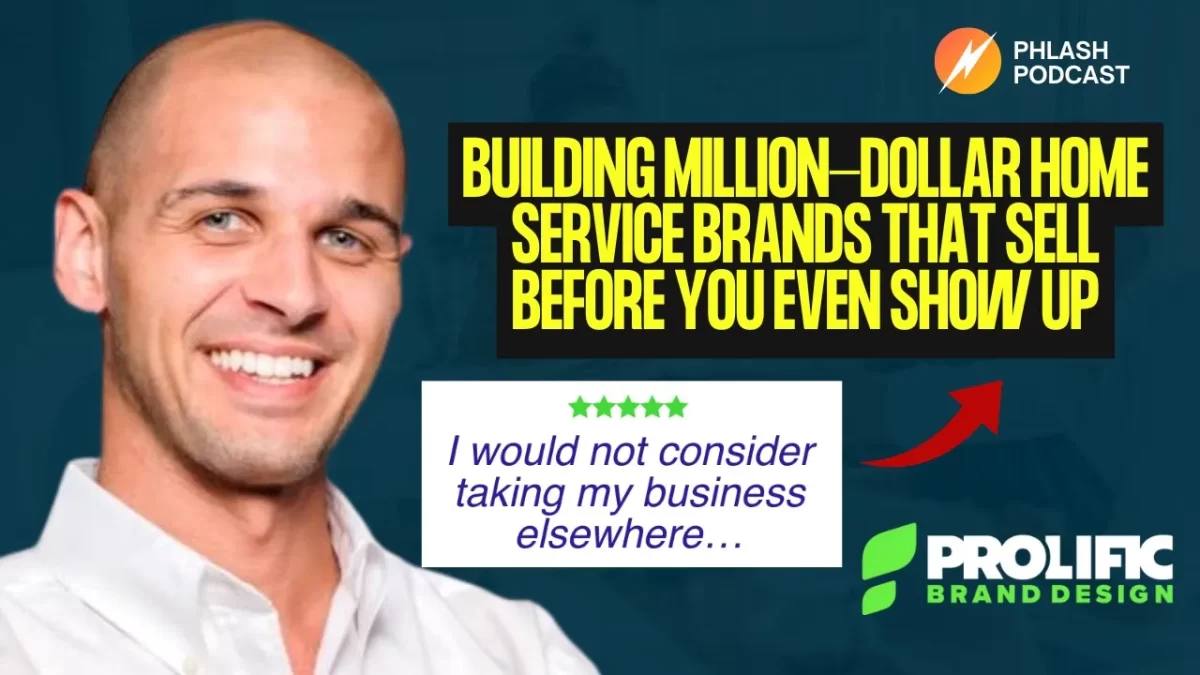
Building Million-Dollar Home Service Brands That Sell Before You Even Show Up with Ryan Kettering

Building Million-Dollar Home Service Brands That Sell Before You Even Show Up with Ryan Kettering
After running a carpet cleaning business for 10 years, Ryan Ketering had a gut-punch realization: if his business disappeared tomorrow, it wouldn’t really matter. Everyone in his industry was marketing in the same channels, saying the same things, looking the same. He had no real identity.
That painful moment led him to transition into branding full-time in 2016. Since then, he’s helped over 2,000 home service businesses grow exponentially, including one company that doubled revenue in two years without additional marketing spend.
The Problem: Your Brand is a Patchwork
Without a brand system, most businesses end up with a mishmash of tactics borrowed from coaches, gurus, and competitors. It works well enough to get by, but nothing feels authentically YOU.
“Branding isn’t just about standing out,” Ryan explains. “It’s about figuring out what is the essence of your business and what you’re trying to deliver to people that has nothing to do with what’s on the invoice.”
Brand = Identity at Scale
Ryan defines branding simply: identity at scale. It’s taking who you are, what you believe, and why you do things, then scaling those ideas across everything you do.
A real brand system answers three questions:
- What do you stand for?
- What makes you different? (The thing competitors think you’re stupid for doing)
- What story do you want people to tell about you?
The Flag and the Nation
Ryan uses a powerful analogy: “Kids pledge allegiance to the flag, not the nation itself. Why? Because you can’t see the nation, but you can see a flag. Your logo is the same it’s a visual representation of something deeper.”
The flag is meaningless without what it stands for. But who cares about a flag if you don’t have a nation worth standing for?
Seven Non-Negotiable Visual Elements
Every client should encounter these during their journey with you:
- Name (most important it’s audible)
- Logo
- Vehicle wrap
- Website (at least homepage)
- Uniform
- Emblematic touch point
- Video
The Secret Weapon: Emblematic Touch Points
An emblematic touch point is a physical symbol that tells your story without words like Carvana’s giant coin customers use to retrieve their car from a vending machine tower, or DoubleTree’s warm cookies (mentioned in 1 out of 3 online reviews).
For home service businesses, this could be:
- A1 Garage Doors offering every client a beverage (only 4% accept, but those are your superfans)
- A custom coloring book for kids
- Something unique that represents your values
“It’s not about the cookie. It’s what it represents,” Ryan explains.
Colors and Characters: It Depends on YOU
Should you have a cartoon character? What colors should you use?
The answer depends on your brand personality. Jester or Everyman brands might rock a cartoon character. Hero or Sage brands probably won’t.
As for colors: Yes, they have meaning. But if everyone in roofing uses black and red, and everyone in plumbing uses blue and orange, nobody stands out.
“We’re not picking wedding colors,” Ryan says. “This is a communication bridge. We use it tactically.”
The One Question That Changes Everything
Want a business worth talking about? Then do things worth talking about.
The hard question: What can you do that’s actually worth talking about?
“Most people just gloss over that question,” Ryan notes. “But if you sit with it, only good can come from it.”
Build for Your 4%, Not the 96%
You’re not building your business for all your clients you’re building for your 4%ers. These are your superfans who refer you constantly and talk about you all the time.
The other 96% will still buy. In fact, you’ll gain more of them when you build something authentic that resonates deeply with your true fans.
Tesla went to full production with zero marketing budget. How? They did things worth talking about. Elon put a car in space, made flamethrowers, and gave patents to competitors because that’s what he believed in.
What Do You Believe In?
The most important question: What have you been setting aside because of your clients’ goals?
96% of your clients’ goals aren’t yours. What are YOUR goals? What do YOU believe in?
The best brands stand for something real. What makes them different isn’t a gimmick it’s what they believe, what they live and breathe.
Start Here
If your answers to “what makes you different?” sound like everyone else’s, don’t dismiss it. You have authentic answers you just haven’t sat with the questions long enough.
Download Ryan’s free Brand Identity System guide at getprolific.com to start the process.
Remember: The most important parts of business are everything that makes no sense as a line item on a P&L. That’s where real branding lives.