
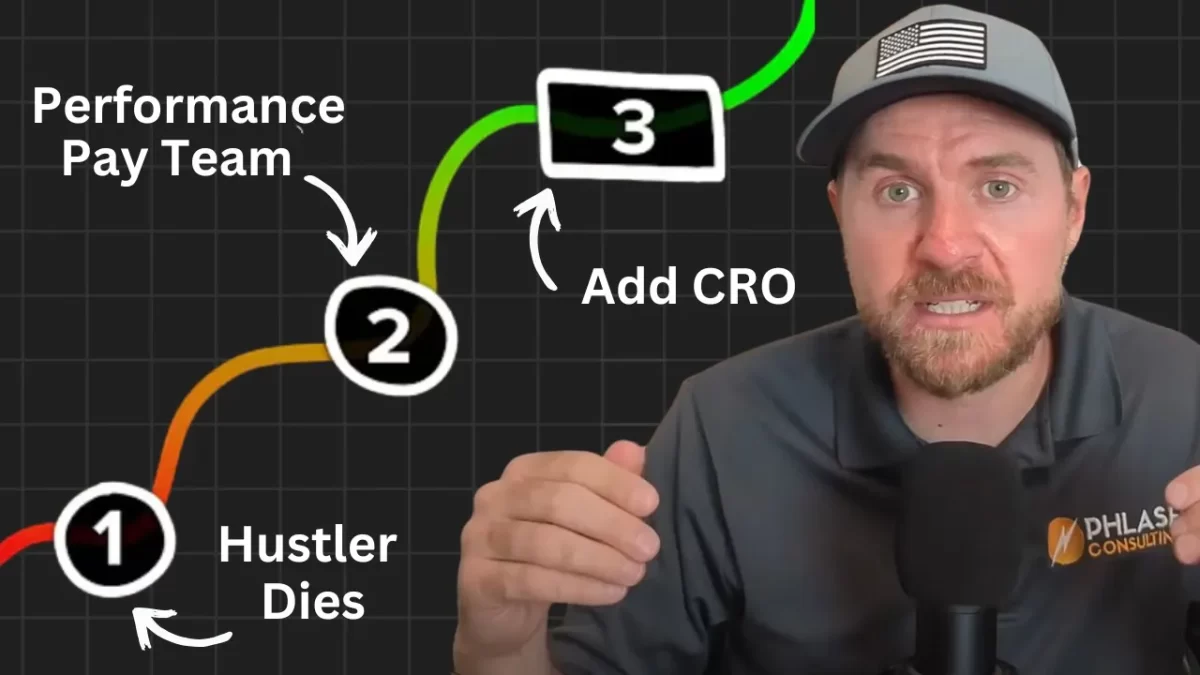
Beat These 3 Bosses to Hit $10M (Most Never Make It Past Level 1)

Beat These 3 Bosses to Hit $10M (Most Never Make It Past Level 1)
Scaling a home service business from $1 million to $10 million isn’t just about “working harder.” At each stage, you face a different set of challenges traps that can keep you stuck for years if you don’t overcome them.
After helping dozens of companies grow (and having lived through these myself), I’ve identified three distinct phases you must break through:
- The Swamp – $1M to $3M
- The Sweet Spot – $3M to $5M
- The Slog – $5M to $10M
Here’s what each stage looks like, the biggest problems you’ll face, and how to beat them.
Stage 1: The Swamp ($1M–$3M)
This stage is called The Swamp for a reason it’s messy, exhausting, and full of quicksand that pulls you back in if you don’t change how you operate.
1. The Hustler Must Die, and the Leader Must Be Born
From $0 to $1M, hustle works. You answer every call, send every estimate, and put out every fire. But between $1M and $3M, that “all on your shoulders” approach starts to break down.
You must buy back your time and shift into a leadership role.
That means:
- Hiring a CSR to handle calls
- Building a sales team
- Delegating estimates and AR/bookkeeping
(Dan Martell’s book “Buy Back Your Time” is gold here.)
We helped a $1.5M company triple their revenue in a year simply because the owner stopped being the bottleneck and started being the leader.
2. No Strategic Budget
Many owners at this stage still run their business out of a checking account one day $80K in the bank, the next $10K.
To scale, you need:
- Defined profit margins
- Payroll % targets (20–40% of revenue)
- A marketing budget (3–10% of revenue)
Books like Profit First help you get this structure in place.
3. No Visibility Into the Right Numbers
Revenue alone doesn’t tell the whole story. You need visibility into:
- Leads year-over-year
- Jobs run year-over-year
- Quotes generated & closing rates
- New customer acquisition
This allows you to zoom out each month and make decisions based on facts, not gut feelings.
4. Lack of Systems & Culture
At this stage, most businesses still don’t have:
- Leadership meetings
- Defined roles
- One-on-one coaching
- Team-building practices
When I worked at a $2.5M business, the lack of structure and culture was holding us back. Once we introduced competitions, team lunches, and CSR–tech collaboration, revenue jumped from $2.5M to $4M in a year.
Key takeaway: In The Swamp, your biggest win will come from replacing hustle with leadership, building systems, and setting clear financial visibility.
Stage 2: The Sweet Spot ($3M–$5M)
This stage is dangerous because it’s comfortable. At $3–$5M with a 20–25% profit margin, you’re making serious money.
Many owners settle here. But if you want to keep growing, you’ll have to reinvest that profit into people and systems which is painful.
1. Build an Initial Leadership Team to Scale
You need more than an “operations guy” and yourself in sales/marketing.
Hire:
- A GM or COO
- Sales & marketing leader
- Finance/HR leader
Your role shifts from doing to vision casting and decision-making.
2. Refine Marketing With CRM Data & Feedback Loops
At this stage, “good enough” marketing stops working. You need:
- Full ROI tracking on every campaign
- Tight CRM data to measure lead sources
- A feedback loop between sales & marketing
3. Align Performance Pay & Incentives
Tie compensation to results:
- CSRs rewarded for booked jobs & upsells
- Techs incentivized for add-on sales & generating estimates
One CSR contest we ran turned a team of four into a booking machine, simply because the goals were clear and the rewards immediate.
Key takeaway: The Sweet Spot is about refining not reinventing your systems. Push through the discomfort of reinvestment, or risk stagnation.
Stage 3: The Slog ($5M–$10M)
You’ve built a big business, but growth stalls because the headaches return. You’re back in the weeds, responsible for driving revenue yourself.
1. Hire a Revenue Growth Leader
You need someone who owns sales & marketing at a high level a Chief Revenue Officer (CRO) or hybrid COO/Sales Director.
They:
- Drive growth strategy
- Execute marketing/sales ideas
- Free you to focus on vision
2. Double Down on Local Branding & Relationships
At $7–$8M, many companies need an in-house marketing coordinator a personable, content-friendly “brand ambassador” who attends local events, builds partnerships, and supports digital marketing efforts.
3. Upgrade Your Leadership Team & Training
You’re only as good as your team.
Some long-time employees may no longer be the right fit for a high-growth leadership role. Invest in leadership training or make the tough calls to replace them.
We worked with a company that went from $3M to $8M in 36 months because they brought in a hungry sales leader with equity incentives. He was directly invested in scaling revenue and it worked.
Final Thoughts
Breaking through each revenue trap requires a different mindset:
- The Swamp: Kill the hustler, become the leader. Build systems, budgets, and culture.
- The Sweet Spot: Resist the comfort zone. Invest in leadership, data, and aligned incentives.
- The Slog: Replace yourself as the revenue driver. Focus on local presence and upgrading your team.
If you’re stuck at one of these stages, it’s not because you’re bad at business it’s because you’re using the wrong playbook for where you are. Switch strategies, and you can absolutely make the jump.